
· Tom
Europe’s 2016/17 Managers Of The Season
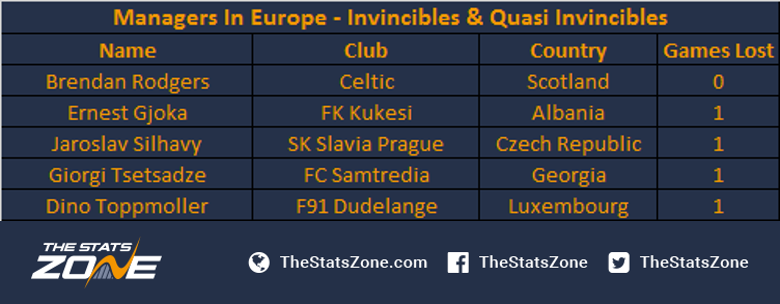
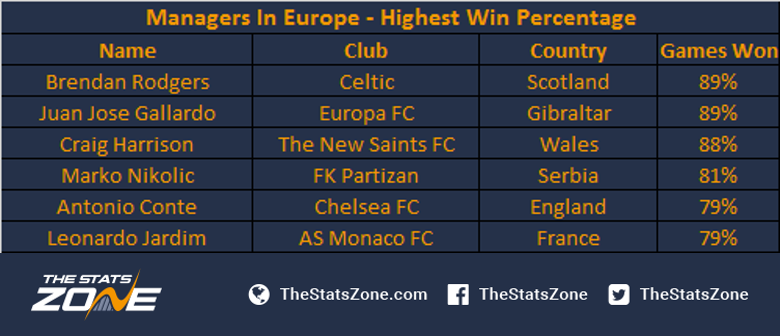
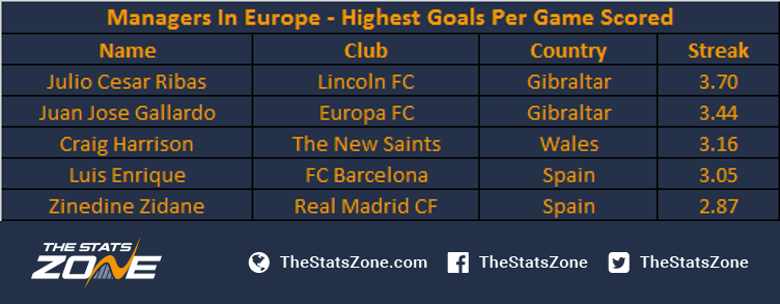
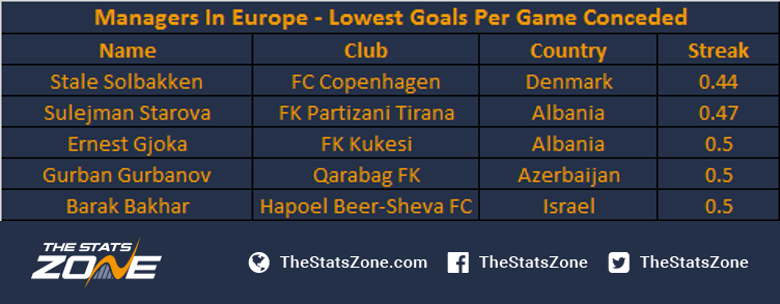
Before we select our top five managers from the 2016/17 season, let's look at the statistics behind some of the top performing bosses in Europe:
TOP 5
1. Gheorghe Hagi (FC Viitorul Constanta, Romania)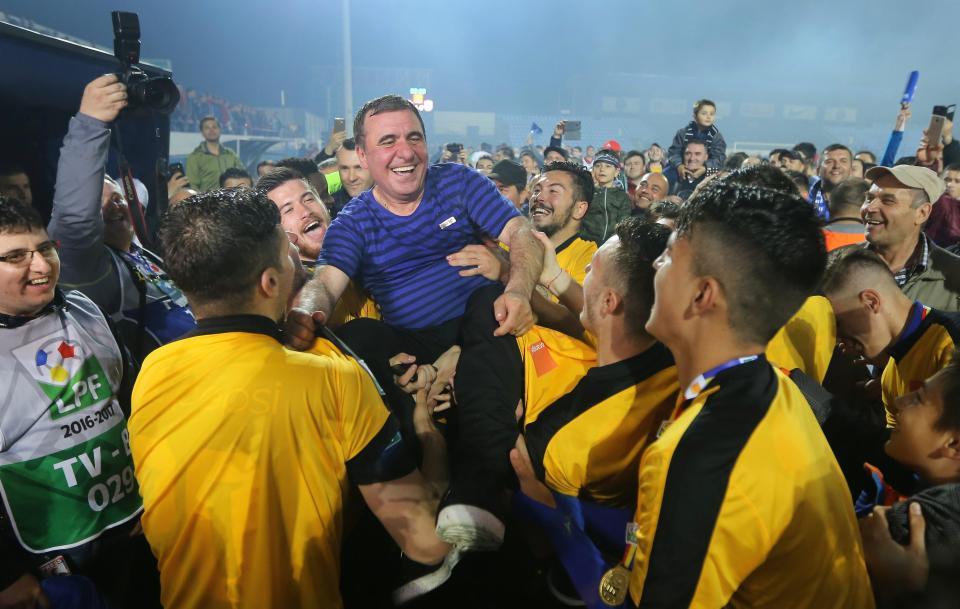
A surprise name to top this season’s list perhaps, but by far the most deserved, easily pushing Zinedine Zidane’s formidable European conquerors into second place.
In an era when money allows the cream of Europe’s elite to rise even higher, simultaneously pushing the less financially fortunate even lower, Gheorghe Hagi has won the Romanian league title for Viitorul - the first in its history - in the hardest way imaginable.
A first-team squad whose average age is 22.2, the lowest in European football title-winning history since Busby’s Babes, was led by Hagi to Romania’s summits not just this season but, for the most part, along a road lasting many hard-working, productive years. Nine members of his title-winning squad are teenagers, and the majority have spent several years coming through Europe’s most innovative youth academy founded by Hagi himself in 2009.
The Gheorghe Hagi Football Academy has become the conveyor belt of Romania’s most talented young players, whose ambition is to play for FC Viitorul Constanta, the club Hagi also set up in 2009 specifically to test the skills of those players at the highest level of domestic professional football.
Eight years later, having risen through Romania’s football leagues with vibrantly-trained, highly-motivated individuals, Gheorghe Hagi secured the ‘impossible’ with a final-day 1-0 victory over CFR Cluj to condemn perennial champions Steaua Bucharest to second-placed doldrums.
"I'm proud, happy, because this academy and this great team, these children, have fought with their last ounce of energy and achieved the impossible!" said Hagi. "We're the youngest champions in Europe. Now this city has entered the history of Romanian football. I've been investing in young people and that's one of my greatest qualities. I'm happy now that I did the right thing."
Viitorul Constanta also reached the last 16 of the UEFA Youth League, a staggering achievement when taking into consideration the money that’s ploughed into youth academies by the giants of European football, of which there are far more than 16.
A further test now awaits Gheorghe Hagi’s champions in the form of the UEFA Champions League third qualifying round. This two-legged encounter will decide their destiny; either the wonderland of the Champions League or the lower-but-still-wonderful achievement of Europa League qualification.
Gheorghe Hagi is currently the toast of Romania, with supporters up and down the country grateful to their former World Cup idol for providing their national team with academy-grown fervour, but all the more grateful for providing their national championship with the victorious flourish of youth.
2. Zinedine Zidane (Real Madrid CF, Spain)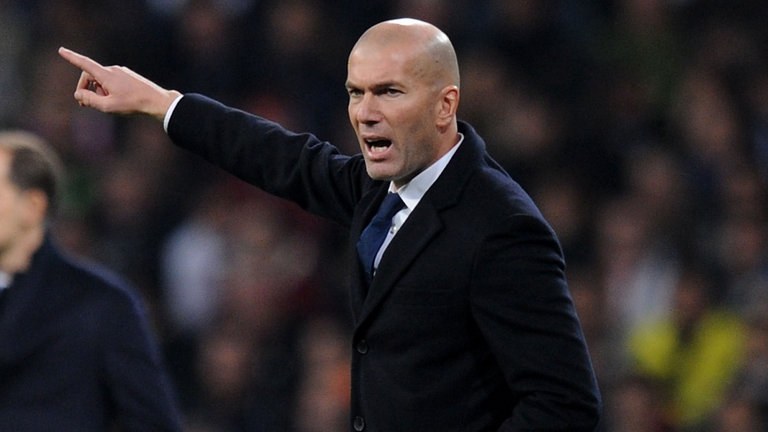
Every year the Champions League crown is worn so deservedly, but also cursedly as a crown that enjoys the comfort of another’s head every 12 months. Last week, Zinedine Zidane reversed that curse with aplomb as his Real Madrid Galacticos blessed the Principality Stadium with a performance to be savoured for decades.
Even more remarkable than Zidane’s unique achievement is that he is still facing the slings and arrows of outrageous critics who can’t help but continue to put his success down to the world-class quality of his players, and not down to his own qualities as a manager.
These suspicions were deeply engraved the moment he lost his head by using it as a butting ram in the 2006 World Cup final. This final act of Zidane’s playing career was so shocking in its context that it remains a most vivid image even a decade on.
But the character-imposing images of a thorough head-butt are now being usurped by a man whose reputation for humility and football intellect is gathering pace, as a tidal wave of opinion shifts from nagging suspicion to surprised and welcome admiration.
We forget that Real Madrid began their Champions League campaign at a slumberous pace, finishing runner-up in their group, Ronaldo managing just two goals in those opening six games.
But their knockout phase defined itself as they knocked the stuffing out of all opponents in their path: a 6-2 aggregate thrashing of Napoli was followed by a 6-3 aggregate win over Bayern Munich, Ronaldo coming into his own with five goals. He didn’t stop there as Real faced dangerous local rivals Atletico de Madrid, whom they cast aside with a Ronaldo-inspired hat-trick in a 3-0 thumping at the Bernebeu.
And whilst last week’s 4-1 humiliation of Europe’s second best side, Juventus, will be remembered as one of the great performances in Champions League folklore, it would be ungracious to forget their triumphant journey through La Liga this season.
A club record 18-match unbeaten run away from the Santiago Bernabeu in all competitions proved decisive in securing Real Madrid’s first title triumph since Jose Mourinho’s memorable 100-point winning title in 2012. That was five years ago, an eternity for Real Madrid, such is the expectation not only of their support but of the entire footballing world.
Zidane’s accomplishments at home and in Europe – seven defeats in 87 matches since he took charge 17 months ago – are being hailed as exemplary, especially in the face of an out-of-form Ronaldo earlier in the season, as well as an injured Gareth Bale late in the season.
Whilst Real Madrid owner Fiorentino Perez is prepared to put the tradition of managerial change to the dustbin, willing Zidane to remain manager for the rest of his life, Zidane himself has shrugged off the attention, claiming his highlight of the season was watching his eldest son Enzo scoring 18 minutes into his debut for Real Madrid’s first team in a Copa del Rey match in December. Sitting atop the highest throne in the world, Zinedine Zidane embraces the biggest challenge after success; thinking of someone else.
3. Leonardo Jardim (AS Monaco FC, France)
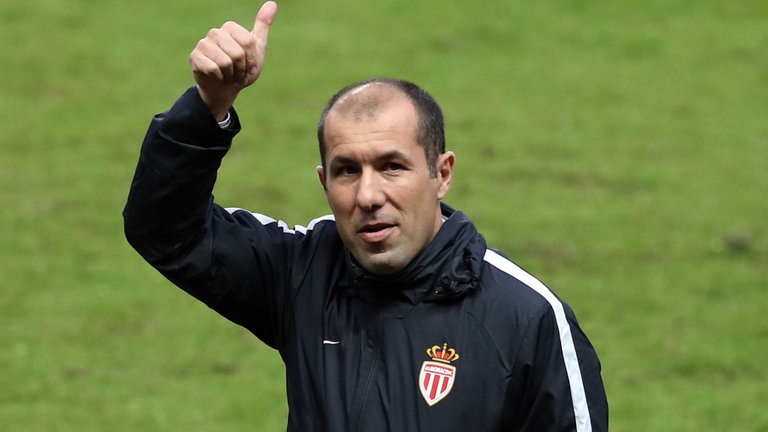
Two years ago, Leonardo Jardim signed an extension to his contract at AS Monaco, accompanied by a run-of-the-mill club statement, glanced at fleetingly by the public at large, “We are confident that Leonardo is the right coach for our philosophy, to enable the club to be a major player on the national and international scene, while allowing our talented young players to develop.”
No truer word spoken when viewed in retrospect after a stunning season that captured the imagination with a scintillating brand of youthful exuberance.
Jardim led Monaco to the domestic league title and reached the UEFA Champions League semi-final after plaudits-aplenty victories over ‘bigger’ teams during the campaign.
Whilst Jardim was the architect behind this success story, one companion who walked – sprinted, in fact – alongside him was 31-year-old Radamel Falcao. Presenting Falcao with the captain’s armband at the start of the season was a masterstroke that not only brought the best out of the previously out-of-form striker, but also added fire to the burgeoning talents of Monaco’s brilliant crop of youngsters, all of whom followed Falcao’s leading example.
104 goals in Ligue 1 secured the title for the first time in 17 years, despite the pressure of cash-rich Paris Saint-Germain in hot pursuit for much of the season. Falcao top-scored for Monaco with 21 goals and Kylian Mbappe followed suit with 15.
Jardim put in perspective the achievement of securing the league title as non-favourites, “Winning a Championship with a team that is not favourite is a great trophy. This is the most important trophy of my life as a coach. We have worked a lot for 11 months. But the best thing came with this title. Monaco being champions is worth four times being champions with Paris Saint-Germain. When Paris wins, it is the habit, when Monaco wins…”
But it was Monaco’s Champions League journey that brought Jardim and his players to the world’s attention. The group phase saw Monaco out-manoeuvre Mauricio Pochettino, whose Spurs were defeated home and away. Pep Guardiola’s Manchester City tumbled at the last-16 stage, Falcao and Mbappe scoring two goals apiece. And Thomas Tuchel’s Borussia Dortmund were comprehensively beaten in the quarter-final, Falcao and Mbappe combining again with four goals between them.
The future looks very bright for the team that Jardim has developed during the last three years. However, a challenge even greater than last season’s achievements is keeping their players at the club. Unity is already being dismantled by the substantial poachers of Europe’s elite. Bernardo Silva is now at Manchester City, and there have already been multiple approaches for their young stars. None more so than Kylian Mbappe, the 18-year-old strike sensation who has reportedly been the subject of €100m+ bids from Real Madrid and Arsenal.
If Jardim is to be without the likes of Mbappe, Lemar, Fabinho and Mendy come next season’s curtain raiser, his managerial skills will be the most important aspect of the club’s recipe for success.
4. Antonio Conte (Chelsea FC, England)
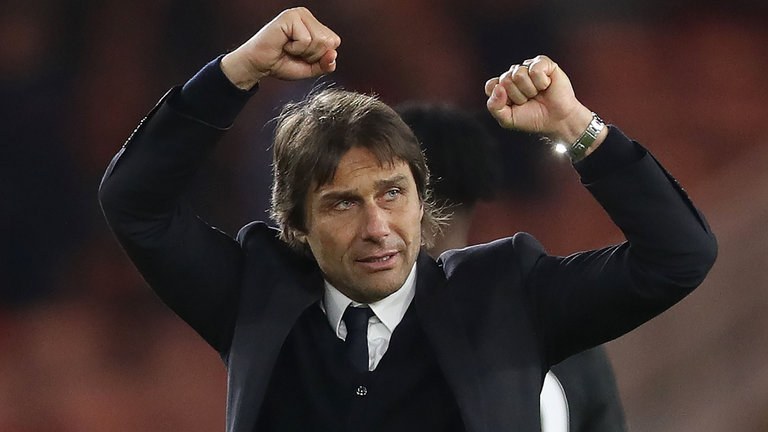
Antonio Conte’s reputation for wildly zealous goal celebrations during Euro 2016 preceded his grand entrance at Stamford Bridge last summer.
Chelsea’s unceremonious start, losing to Liverpool and Arsenal in their first six league encounters, was instantly and comprehensively reversed after Conte had changed his team’s formation to 3-5-2. A run of 13 Premiership wins on the bounce – which included 10 clean sheets – rekindled memories of similar success stories in Italy.
Two promotions to Serie A with Bari and Siena in 2009 and 2011 respectively earned Conte the managerial reigns at Juventus, who hadn’t won any silverware for six years. The appointment was a historic success, as Conte led the Bianconeri to an ‘invincible’ league campaign in his first season. The backbone of his team were Giorgio Chiellini and Leonardo Bonucci.
Two more Serie A titles followed, including a record-breaking haul of 102 points in his final season.
So record runs are nothing new to this 47-year old former Italian international. The 30 wins with Chelsea in the Premiership would have been viewed by Italian onlookers as merely a continuation of his golden touch in Serie A.
Next season the UEFA Champions League beckons, the one competition in which he failed to excel at Juve. English clubs have fallen significantly below the necessary standards required to win this competition in recent years. The fast-paced effects of the Premiership can’t be consistently blamed for poor performances on the European stage, and Conte will certainly not be using the bruising intensity of domestic clashes as an excuse to falter in Europe’s showpiece arena.
If he does manage to lift the ultimate prize, the mantle of ‘greatest manager’ will be assumed by press and pundits in the same way Guardiola and Ancelotti have adorned such reputations in recent years.
5. Giovanni van Bronckhorst (Feyenoord, Netherlands)
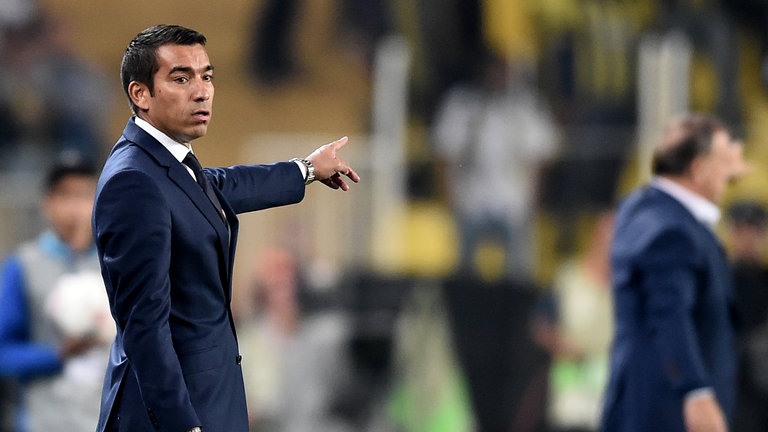
Massive over-spending a few years ago led Feyenoord to the brink of bankruptcy and the lowest point in the club’s history, which included a 10-0 defeat to PSV Eindhoven in 2010.
They were rescued by private investors, who didn’t take long to recruit Ronald Koeman as manager the following year. Koeman picked Giovanni van Bronckhorst as his assistant, but the pair failed to land the title in three attempts.
Koeman departed for a tilt at the Premiership with Southampton and two years ago Van Bronckhorst was entrusted with his first tilt as manager of Feyenoord.
Although expectations were low for the first-timer, supporters were patient with their former favourite, who spent most of his playing career at the club.
Third place and 21 points behind eventual champions PSV was considered disappointing in his first season, but the board remained nonetheless loyal and Van Bronckhorst raised his game.
He began this campaign with a 5-0 drubbing at Groningen and continued this exemplary form with a nine-match winning run. Danish striker Nicolai Jorgensen became Van Bronckhorst’s talisman, finishing the season as the Eredivisie’s top goalscorer. But it is club captain Dirk Kuyt who will remain forever etched in the club’s corridors of memorabilia; needing to win the final game of the season against Heracles to secure the title, Kuyt began euphoric celebrations with a goal after just 40 seconds of the match. Two more to complete his hat-trick delivered a 3-1 victory for Van Bronckhorst’s men, and rampant frenzy on the terraces.
Feyenoord’s first Eredivisie title this century has been almost exclusively celebrated as an extraordinary achievement by Giovanni van Bronckhorst, as though his absence would have ensured a lower finish for the club.
Even Ajax’s impressive march to the Europa League final was put in the shade by Van Bronckhorst’s stunning title success with Feyenoord, often compared domestically through the season with Leicester City’s miracle workers of the previous campaign.
Whilst Ajax’s manager Peter Bosz has left in acrimonious circumstances to take over at Borussia Dortmund, Van Bronckhorst remains focused on his Feyenoord career.
A good run in the Champions League, as well as further success domestically, would raise his status considerably, and maybe the recent press reports linking him with the Arsenal job could become a reality at the end of Arsene Wenger’s contract in two years’ time.
BRITISH WINNERS ABROAD
It seems all’s gone quiet on the managerial front insofar as British success abroad is concerned. However, we should raise a toast to three successes this season:
- Graham Potter began his managerial career in 2010 with Swedish club Ostersunds FK, who were in the fourth tier of Swedish football. Five years later, Potter secured promotion to the top flight for the first time in the club’s history. Now he has reached superstardom in this Scandinavian country by condemning high-flyers IFK Norrkoping to a 4-1 Cup final defeat, Ostersunds’s first major trophy.
- Mark Miller has won the Maltese title with Hibernians. It is his third championship title in Malta, having won previously with Hibernians in 2009 and with Valletta in 2014.
- Paul Ashworth has won the Latvian Cup with FK Ventspils, the club’s first title for four years.
OTHER NOTEWORTHY HIGH ACHIEVERS
- Having played the role of youth team and assistant manager since 2009, Massimo Carrera is the latest Italian manager ruffling feathers after guiding Spartak Moscow to their first league title in 16 years.
- Of all managers who won league titles across Europe this season, Stale Solbakken tops the table with the highest number of championships achieved in his career - seven in total following FC Copenhagen’s title triumph.
- Senol Gunes, who led Turkey to the semi-final of the 2002 World Cup, becomes the first Turkish manager to win consecutive Turkish championships after leading Besiktas JK to their 15th Super Lig title.
- Brendan Rodgers enjoyed a phenomenal season with Celtic FC, who were the only side on the continent with an ‘invincible’ league record, winning 34 out of 38 league matches this season.


